

Back when
Canada’s population was booming
— swelling consumer demand and the country’s labour supply — the economy looked good on the surface.
But below the surface, rising interest rates and unemployment were creating conditions for Canadian households “functionally indistinguishable from a recession,” said
Royal Bank of Canada
economists in a report out yesterday.
Even before the trade war shook Canada’s economy, per capita, or per person, gross domestic product was declining, even as
overall GDP
grew by 2 per cent in both 2023 and 2024 — a situation RBC calls “historically unique.”
Canada gained 2.1 million residents between 2022 and 2024 and this decades-high population boom masked the harsher reality going on in the background.
Households saw their buying power shrink, pressured by higher interest rates and even
higher inflation
. As consumer demand weakened, more people were competing for fewer jobs, and unemployment soared.
Canada might not have been in
a recession
, but for many Canadians it sure felt like it.
“Now, the reverse is happening,” said the RBC economists led by Frances Donald.
“Per-capita GDP — a better measure of how individual households and workers experience the economy — is on track to post an increase in 2025 for the first time in three years.”
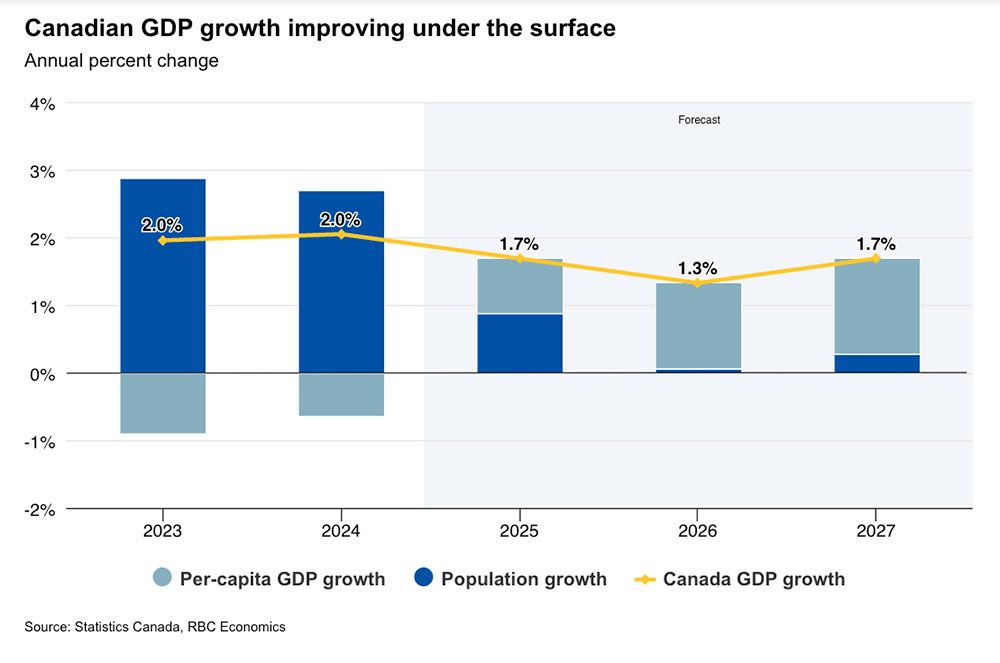
The curbs on temporary resident arrivals have sharply lowered the number of consumers and workers, but while this will reduce total GDP growth, it should not significantly impact per-capita growth and unemployment, said RBC.
In fact, the underlying measures of the economy are showing “encouraging improvement,” they said.
Unemployment appears to have peaked, falling to 6.5 per cent in November, down 0.4 percentage points from the year before.
And spending is up. Spending growth in the second quarter of this year rose by 2.4 per cent per capita, the fastest pace in three years, said RBC.
“The improvement in per-capita GDP represents a significant milestone,” said the economists and they are “cautiously optimistic” it will continue to improve.
Oddly enough, trade ranks among their reasons for optimism.
While the economists don’t expect the United States to reverse tariff hikes, they also don’t expect significant increases as political appetite for this eases ahead of the November 2026 midterm elections.
Keeping the
Canada-United-States-Mexico-Agreement (CUSMA)
exemption is crucial, but RBC argues this is equally important for U.S. importers.
Sign up here to get Posthaste delivered straight to your inbox.

Canada’s
inflation rate is holding steady
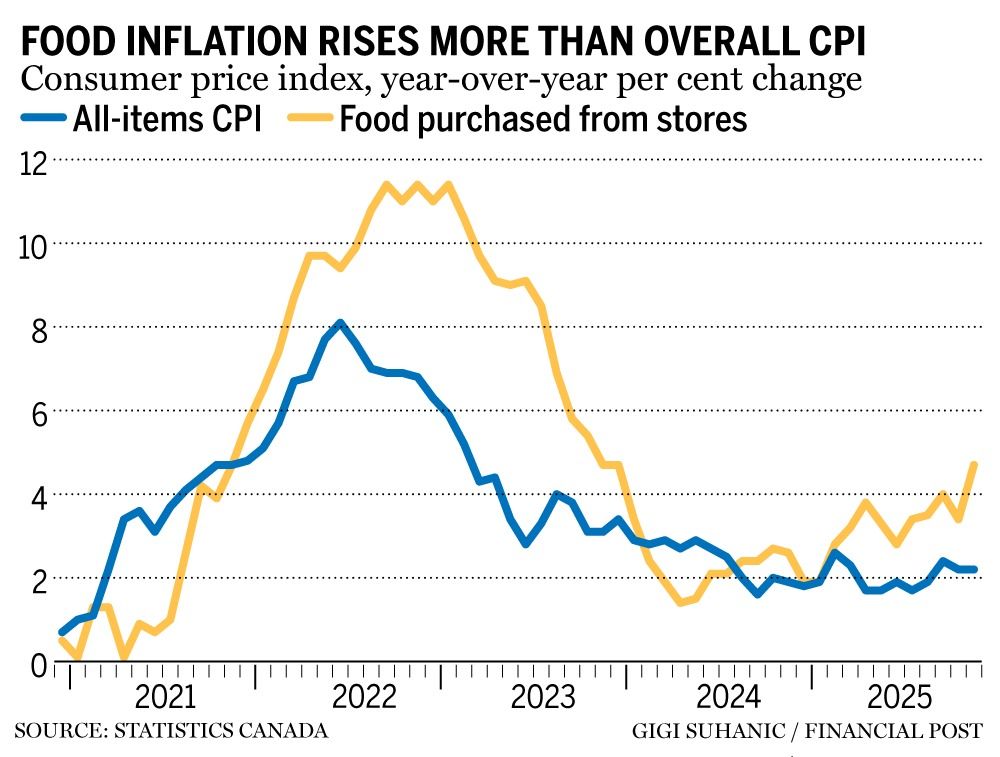
, except for food prices, which are climbing at their fastest pace in two years.
The price of food purchased in stores rose by 4.7 per cent year-over-year in November — the fastest rate since December 2023, while overall inflation held steady at 2.2 per cent.
“To put the impact of rising grocery costs in perspective, the overall inflation rate excluding food is a mild 1.85 per cent y/y,” wrote Douglas Porter, chief economist at BMO Capital Markets after data was released Monday.
“Meat, coffee, sugar/chocolate and now fruit prices are the biggest drivers of this renewed upswing in grocery price inflation.”

- Bank of Canada Governor Tiff Macklem will deliver a speech at the Chamber of Commerce of Metropolitan Montreal
- Today’s Data: United States retail sales and jobs report
- Earnings: Lennar Corp.


- How Immigration Minister Lena Metlege Diab is pushing for balance on one of Ottawa’s most delicate files
- The Federal Reserve’s rate cut was a clear signal to investors
- Garry Marr: How raiding your TFSA before the end of year could save you thousands

Nobody should be raiding their tax-free savings account for a frivolous reason — it’s not meant to be a slush fund. But if you’re going to pull money out strategically, the clock is ticking.
That’s because of a unique feature of the accounts that restores contribution room at the start of the calendar year following a withdrawal. The Financial Post Garry Marr fills us in how raiding your TFSA before the end of year could save you thousands.
Find out more

Interested in energy? The subscriber-only FP West: Energy Insider newsletter brings you exclusive reporting and in-depth analysis on one of the country’s most important sectors.
Sign up here.
McLister on mortgages
Want to learn more about mortgages? Mortgage strategist Robert McLister’s
Financial Post column
can help navigate the complex sector, from the latest trends to financing opportunities you won’t want to miss. Plus check his
mortgage rate page
for Canada’s lowest national mortgage rates, updated daily.
Financial Post on YouTube
Visit the Financial Post’s
YouTube channel
for interviews with Canada’s leading experts in business, economics, housing, the energy sector and more.
Today’s Posthaste was written by Pamela Heaven with additional reporting from Financial Post staff, The Canadian Press and Bloomberg.
Have a story idea, pitch, embargoed report, or a suggestion for this newsletter? Email us at
.
Bookmark our website and support our journalism: Don’t miss the business news you need to know — add financialpost.com to your bookmarks and sign up for our newsletters here
,
#Posthaste #metric #tells #Canadians #improving #time #years

0 Comments